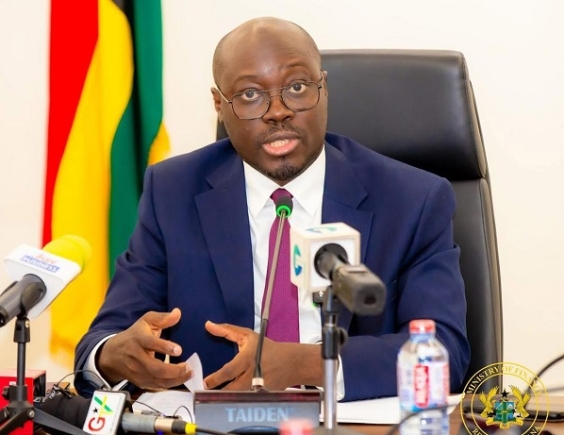
The Minister for Finance, Dr. Cassiel Ato Forson, on Thursday presented the 2026 Budget Statement and Economic Policy to Parliament, outlining government’s renewed focus on stability, growth, and economic transformation. The budget, themed “Resetting for Growth, Jobs and Economic Transformation,” sets out a bold expenditure framework aimed at consolidating the steady recovery witnessed over the past year.
Economy Rebounds With Strong Growth
Presenting the budget, Dr. Ato Forson declared that Ghana’s economy has “regained its rhythm,” highlighting a 6.3% GDP growth in the first half of 2025, driven largely by agriculture, services, and increased investor confidence. Inflation, he noted, has dropped significantly to 8% as of October 2025, restoring Ghana to single-digit inflation territory for the first time in years.
GH¢302.5bn Expenditure Bill for 2026
The government is projecting a total expenditure of GH¢302.5 billion, representing approximately 18.9% of GDP. Revenue and grants are expected to hit GH¢268.1 billion, leaving a projected fiscal deficit of GH¢34.4 billion on a commitment basis.
On a cash basis, the deficit is projected at GH¢64.2 billion, while the primary balance is expected to record a surplus of GH¢23.3 billion.
Major Tax Reforms Announced
To ease the burden on businesses and households, the Finance Minister announced several tax adjustments:
Abolition of the COVID-19 Health Recovery Levy
Reduction of the effective VAT rate from 21.9% to 20%
Increase in VAT registration threshold from GH¢200,000 to GH¢750,000
Extension of zero-rated VAT on locally produced textiles until 2028
These reforms, he said, are aimed at supporting local production and boosting private-sector growth.
Big Push Infrastructure Programme Launched
A key highlight of the budget is the launch of the US$10 billion Big Push Infrastructure Programme, expected to significantly modernize Ghana’s transport, logistics, and energy infrastructure. For 2026 alone, GH¢30 billion has been earmarked for road and bridge projects across the country.
“This initiative will translate fiscal stability into physical progress,” the Minister stated, emphasizing the government’s commitment to job creation through infrastructure expansion.
Strong Support for Agriculture and Industrialisation
The government has allocated:
GH¢245 million for food security, modern farming, and agro-processing
GH¢6.9 billion for a new Oil Palm Industrialisation Programme (2026–2032)
These initiatives are designed to accelerate value addition, support farmers, and reduce food import dependency.
Education and Energy Receive Significant Boost
The Ministry of Education is set to receive GH¢33.3 billion, with a strong push to end the double-track system by 2027.
On the energy front, GH¢15.2 billion has been approved for sector shortfalls, alongside GH¢4.8 billion for Independent Power Producer (IPP) arrears and GH¢2 billion for rural electrification.
Investing in Social Protection
The 2026 Budget continues to strengthen support programs for vulnerable groups:
GH¢1.1 billion for the Livelihood Empowerment Against Poverty (LEAP) programme
GH¢401 million for the Women’s Development Bank
GH¢170 million for the National Apprenticeship Programme
These interventions aim to reduce poverty and promote inclusive economic participation.
Government Optimistic About 2026 Outlook
The economy is expected to grow by 4.8% in 2026, supported by stable inflation, improved energy supply, and stronger private-sector activity.
Closing the budget presentation, Dr. Ato Forson declared:
“Our eyes are on the future, our purpose is clear, and our resolve unshakable. Ghana is rising – stronger, fairer, and unstoppable